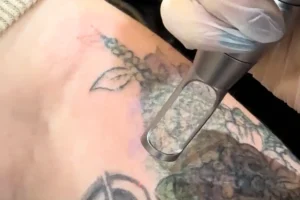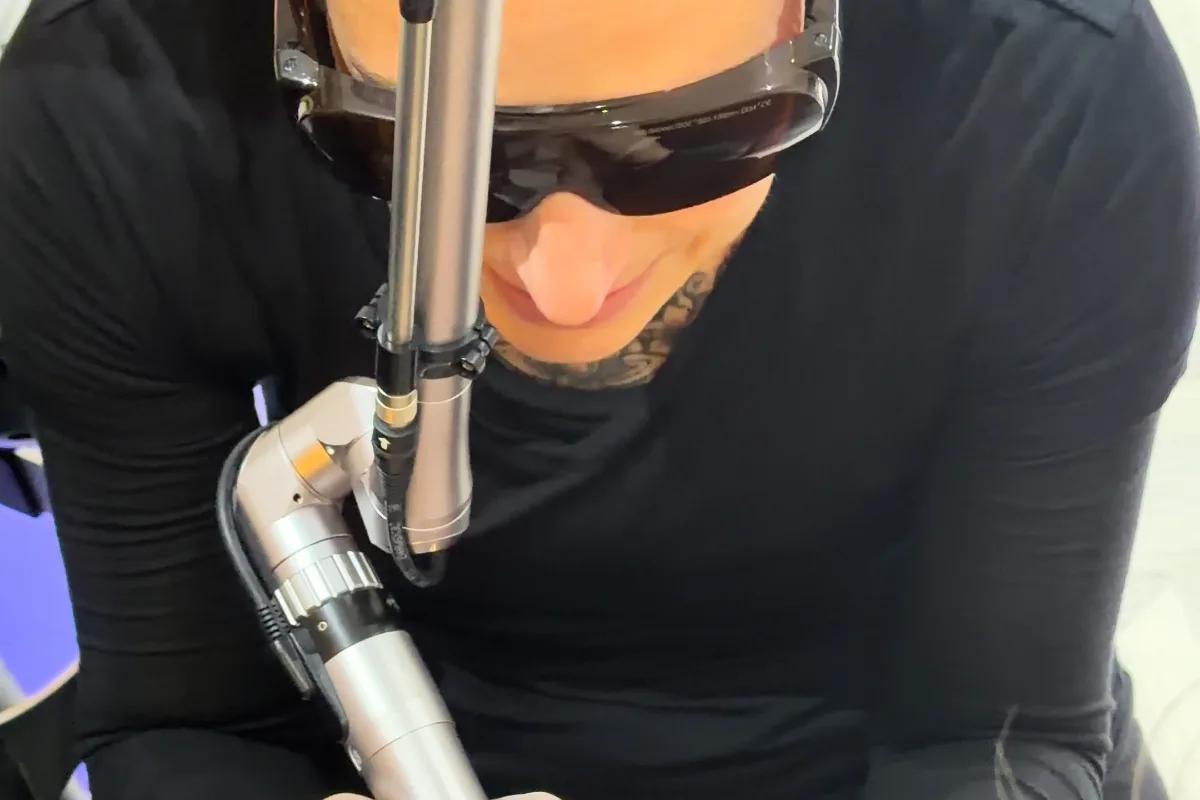
It’s one of the most interesting questions we’re asked: where does the tattoo ink actually go?
The laser doesn’t suck the ink out of your skin, and most of it doesn’t simply come through the surface.
Instead, laser tattoo removal works by helping your own body deal with pigment that it previously couldn’t effectively remove.
Breaking down the pigment
Tattoo pigment sits within the dermis of your skin.
During laser tattoo removal, extremely short pulses of energy are directed towards that pigment. Different wavelengths can be used because different colours absorb different wavelengths of light – which is why black and coloured tattoos respond differently.
When the pigment absorbs the appropriate laser energy, it undergoes extremely rapid heating and mechanical stress, causing larger pigment particles and pigment-containing structures to break into smaller fragments.
That’s where your body comes in.
Your immune system does much of the work
Cells involved in the immune system interact with tattoo pigment both before and after laser treatment. Following laser-induced fragmentation and tissue changes, pigment is gradually processed and cleared through biological pathways over time.
That’s why your tattoo doesn’t simply disappear while you’re lying on the treatment bed.
Instead, you’ll usually see gradual fading over the following weeks – and sometimes continued changes for considerably longer.
Why waiting between treatments matters
This is one of the reasons spacing tattoo-removal sessions appropriately is so important.
Treating the tattoo again very quickly doesn’t give your body more time to do its job. Your skin also needs to recover properly before being exposed to further laser treatment.
So although the laser gets most of the attention, successful tattoo removal isn’t just about the machine. You can read more about the process in how laser tattoo removal works.
The laser starts the process. Your body continues it.
Book a consultation in Truro
Thinking about laser tattoo removal in Truro? Book a consultation and we’ll assess your tattoo, explain what’s realistic and plan your treatment with you.